Long ago, the grand vision for computational scientists was to build machines capable of learning and thinking like humans. Today, as that boundary blurs, we face an even more urgent challenge: how can we harness computing power to solve the critical physical challenges of safety, mobility, and human wellbeing?
The Catalyst: Two Wheels in One of the World's Densest Cities
My choice of an engineering path was inspired by a lifelong fascination with mathematics, physics, and science in action for the benefit of society. But my deep passion for transportation engineering and traffic sensing wasn't born in a sterile lecture hall—it was forged on the streets of Dhaka on two wheels.
As an avid cross-country motorcyclist in Bangladesh, I navigated roads where lane discipline was practically non-existent, congestion was crippling, and safety risks were constant. In a city of over 20 million people, you realize very quickly that pouring more asphalt or widening roads cannot solve urban mobility on its own. What was desperately missing was intelligence—the ability to perceive, quantify, and understand roadway dynamics in real time.
"Experiencing the daily friction of congested roads firsthand instilled in me a conviction: technology must not just be theoretical; it must directly safeguard human life."
Edge AI on a Raspberry Pi: The Lane Violation System
During my undergraduate studies in Computer Science & Engineering at BRAC University (where I graduated with a 3.73 CGPA and 70% merit scholarships), I began experimenting with microcontrollers and System-on-a-Chip (SoC) platforms like the Raspberry Pi.
For my undergraduate thesis, our team asked a bold question: Can we turn existing, low-cost traffic surveillance cameras into automated lane-rule enforcement devices? We engineered an edge device combining custom YOLOv5 object detection, Hough-line transforms, and Canny edge algorithms to detect vehicle defaulters even when road lane markers were worn and faded.
The system achieved 78% detection accuracy operating in real time directly on resource-constrained hardware. It was accepted at the 2019 International Conference on Advances in Emerging Computing Technologies in Saudi Arabia, published by IEEE, and awarded Best Presentation in Intelligent Systems. That moment proved to me the transformative power of practical computer vision.
The BDSET Fellowship: Deep Learning & Spatial Computing at IIT
After graduating, I briefly joined BRAC University as a Lecturer in Spring 2022, teaching structured programming in C, Python, and Java. Shortly after, I was selected among the top 30 candidates nationwide through a rigorous competitive exam for a prestigious fellowship fully funded by the Government of India and the Bangladesh Hi-Tech Park Authority (BHTPA).
For six months, including a one-month internship at the Indian Institute of Technology (Guwahati & Kharagpur), I immersed myself in deep learning, Augmented Reality, Virtual Reality, and Natural Language Processing (building domain-specific Bangla GloVe embeddings). It expanded my horizon from 2D vision to full 3D spatial computing.
Multimodal Sensing: AR and Biometric Vitals for Autism
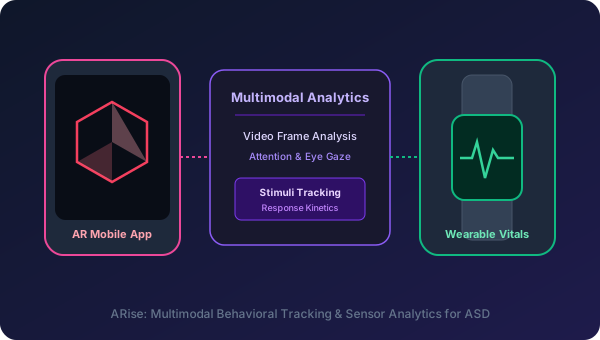
Returning from India, I joined the Advanced Intelligent Multidisciplinary Lab (UIU/ULAB) as a Research Engineer. In collaboration with Dr. Doulah, we initiated ARise, an assistive educational Augmented Reality platform for children with Autism Spectrum Disorder (ASD).
We realized that measuring engagement in neurodivergent learners requires more than subjective surveys. We integrated wearable smartwatches (Google Fitbit) to tap into raw accelerometer sensor data, pairing it with automated computer vision video frame analysis to capture gaze stability and stimuli kinetics. That work resulted in an MDPI journal publication and taught me how multimodal sensing can bridge machine intelligence with human cognitive behavior.
The New York Chapter: 3D LiDAR, ADAS & TRB 2026
In Fall 2025, I was awarded a 5-year Ph.D. Fellowship at the Grove School of Engineering at The City College of New York (CUNY), joining the AI & Mobility Research Lab under Dr. Yiqiao Li in Transportation Engineering.
Here, all the threads of my background—computer science, 3D spatial point clouds, edge vision, and transportation systems—converge. Over the past year:
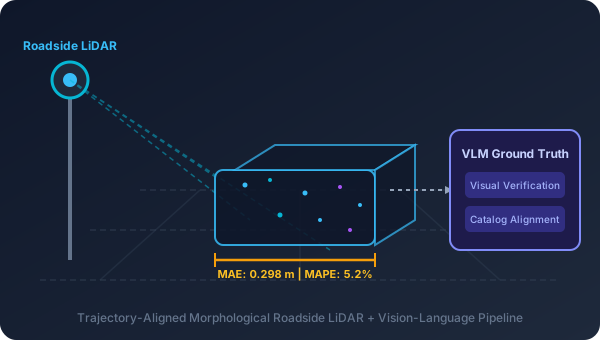
- We developed an infrastructure-based 3D LiDAR framework extracting bumper-to-bumper vehicle dimensions, introducing an automated Vision-Language Model (VLM) validation pipeline that achieves an MAE of 0.298m.
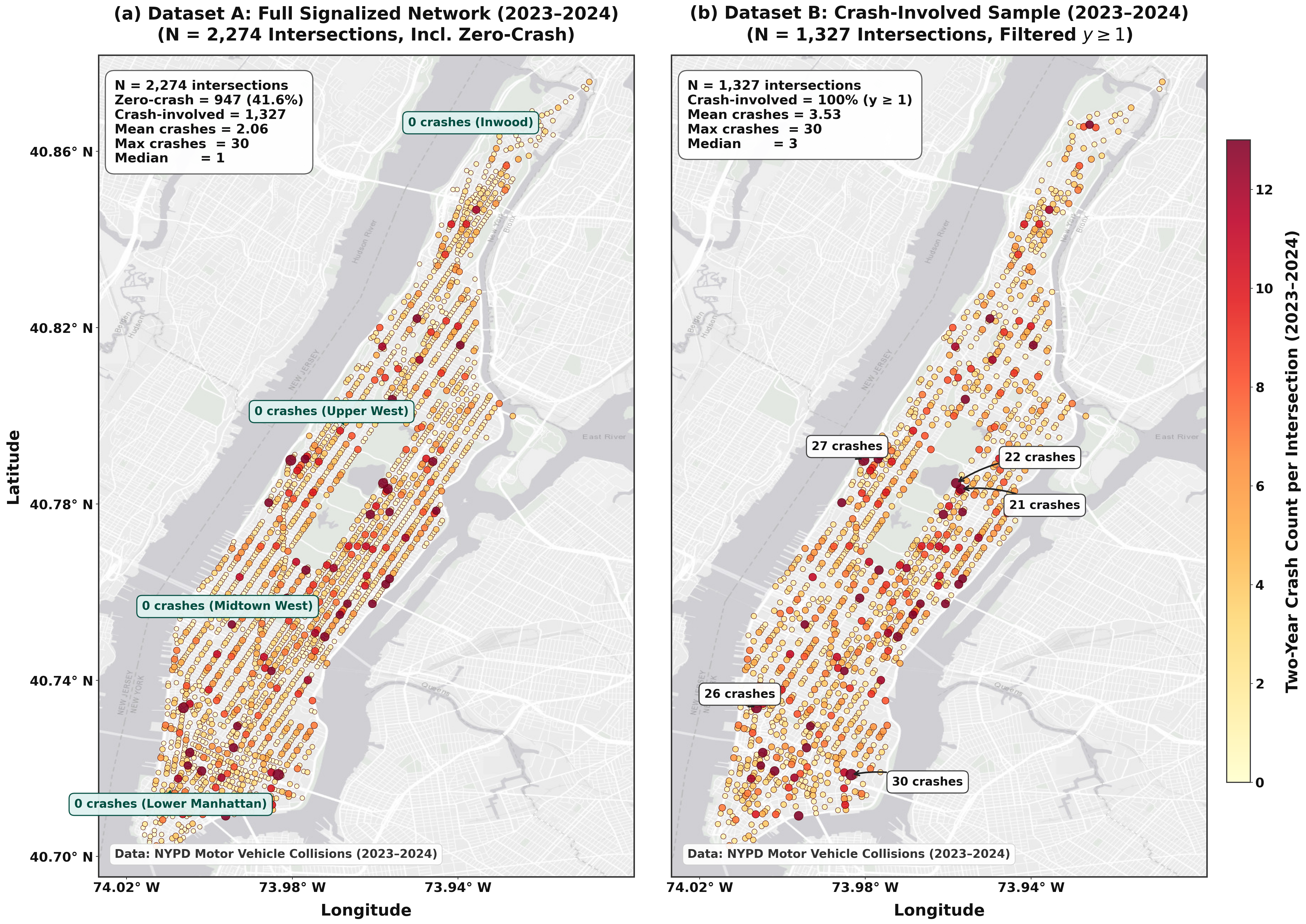
- We completed our study on Infrastructure–ADAS Interactions in Urban Crash Risk, fusing computer vision surrogate safety metrics with road geometry to understand crash risks across Manhattan. This research was officially accepted at the 105th Transportation Research Board (TRB) Annual Meeting (2026) in Washington, D.C.
Looking Ahead
Outside the lab, my passions remain storytelling and cycling—creating films for YouTube and leading community rides with BDCyclists. These creative pursuits keep me grounded. In the long term, my goal is to lead innovative transportation and spatial computing research, teach and mentor future engineers, and build technologies that make physical mobility safer, more accessible, and more humane for all.